New. If Music...
Jakub Józef Orliński (countertenor), Michał Biel (piano)
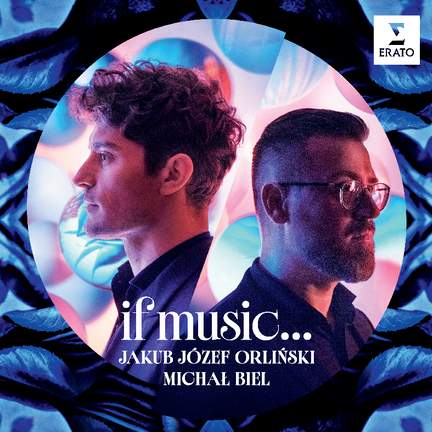
New. If Music...
Jakub Józef Orliński (countertenor), Michał Biel (piano)
Purchase product
Other available formats

About
If music… showcases star countertenor Jakub Józef Orliński in 17 songs and arias by three composers of the Baroque era: Purcell, Handel and Fux. Perhaps unexpectedly, he is partnered not by an ensemble of period instruments but by a pianist – his long-standing colleague Michał Biel.
“On this album we have combined arias and songs that inspire and speak to us, “ says Jakub Józef Orliński. “I love thinking of albums as pages out of my diary. They are a statement of where I am as an artist.“ As Michał Biel, who draws on all the possibilities of a Steinway grand piano, freely admits: “If music… is not an answer to the question of how to perform these masterpieces with historical authenticity.” He sees each aria or song as “a carefully considered transcription that reveals its appeal transcending instrumentation”.
The album’s title derives from a sensuous Purcell song with a text inspired by Shakespeare, ‘If music be the food of love’. As Orliński explains, “Each piece of music we perform on the album evokes a different answer for that blank space in its title.” When it comes to the ‘Cold Song’ (‘What Power Art Thou?’) from Purcell’s King Arthur, Biel strikes chilling, percussive chords. “Here the listener should be shocked, frozen,” he says, “though my aim is not to ‘modernise’ or romanticise the music on the album, but to realise it on the modern piano while keeping true to its harmonies and spirit.”
Among the Handel arias are ‘Where’er you walk’ from Semele (originally conceived for the tenor voice), the stately ‘Ombra mai fu’ from Serse, and the lamenting ‘Voi che udite’ from Handel’s Agrippina, which Orliński first recorded with Il Pomo d’Oro and its chief conductor Maxim Emelyanychev. Closing the album is a much-loved solo piano transcription of Bach, made 100 years ago by the British pianist Myra Hess:, ‘Jesu, Joy of Man's Desiring’. Its enduring popularity demonstrates the potential the piano holds in music of the Baroque era.